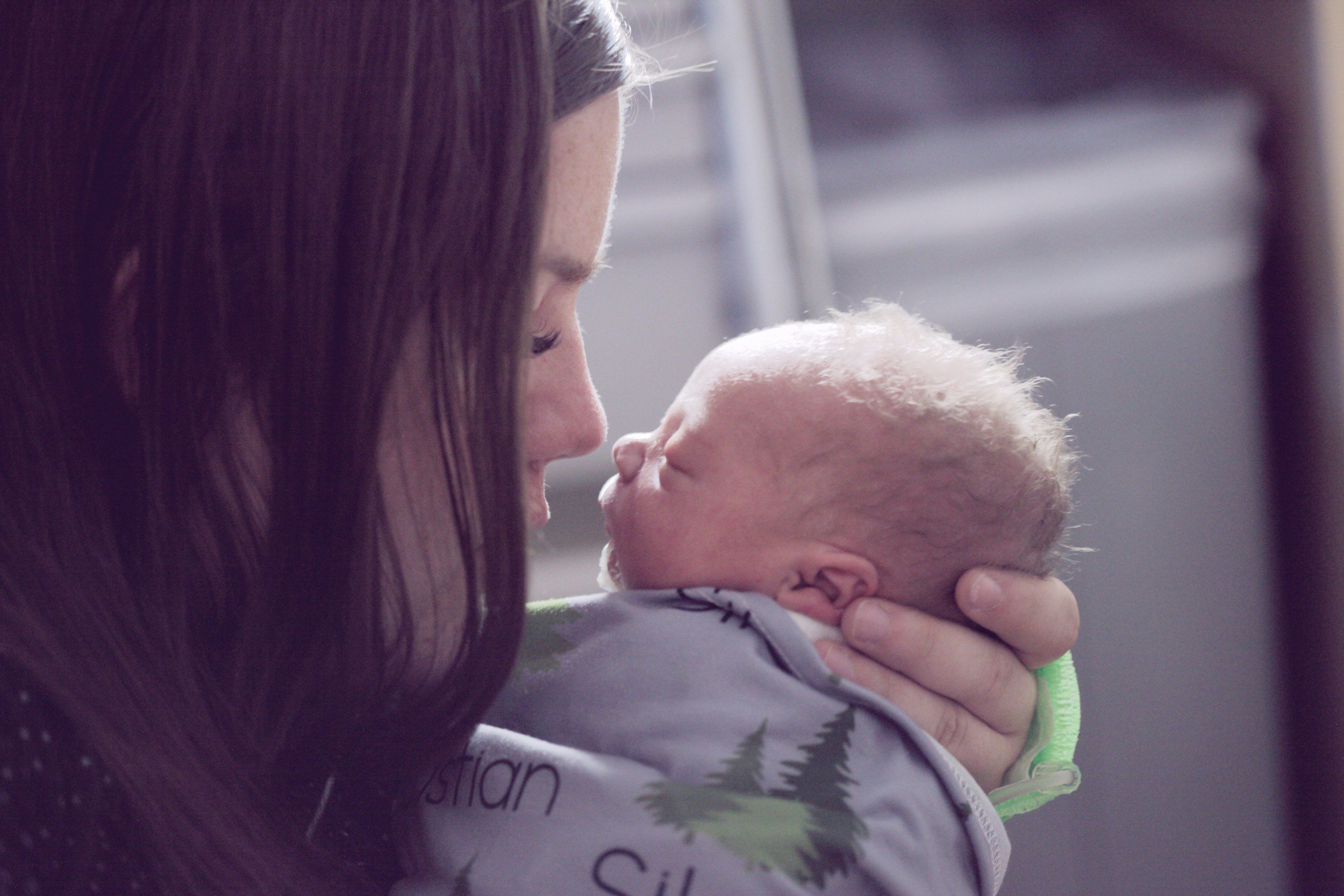
Postpartum Support Mellissa Tonne Postpartum Support Mellissa Tonne

How Therapy During Postpartum Can Help

One of the most challenging things about postpartum is the isolation a mother feels, especially when she is experiencing postpartum depression or anxiety. Postpartum hormones and sleep deprivation can make you feel completely alone in your experience and feel that you are failing. One of the most powerful things that can change the postpartum experience is to be told that you are not alone. 

One of the most challenging things about postpartum is the isolation a mother feels, especially when she is experiencing postpartum depression or anxiety. Postpartum hormones and sleep deprivation can make you feel completely alone in your experience and feel that you are failing. One of the most powerful things that can change the postpartum experience is to be told that you are not alone. 

Just hearing someone else say, “Yes! I went through that too,” is more than enough to lift the mood and realize that what you are experiencing is not crushing failure but part of the human experience.

There are so many challenges in those first few months, and if you are experiencing them for the first time, it is overwhelming and all-consuming. There’s often an expectation that you will be rocking your newborn, singing them a song, and experiencing “newborn bliss.” And there might be some of that, but there might also be moments that bring lots of tears. 

Tears because the baby wouldn’t latch, and you had to give them a bottle

Tears after a fight with your partner that felt absolutely devastating, and you think your marriage might be over before it ever truly started. 

Tears when you find yourself wondering how something you wanted so badly can feel so incredibly hard.


Postpartum is not a static experience; it constantly shifts as the baby grows. As soon as you think you’re finally getting on your feet, a sleep regression occurs, or the baby starts teething, and you wonder, “How can I keep going like this?” 

Therapy can be the soft place to land 

Therapy can be a space where you don’t have to hold it all together. 

A space where your experience is met with understanding, not judgment. 

Maybe what you need is just someone to hear what you’re going through and say, “Yes, that sounds really hard.”

Maybe you need some tools to take with you to help you regulate in those moments of overwhelm.

Maybe you and your partner need a place to reconnect. To find a place where you can figure out roles and expectations, and to share about the tough moments. 


You do not have to carry it all on your own. 


No matter what your experience is, there is support, and there is understanding. There is a light at the end of the tunnel to improve your well-being and your postpartum experience.


I offer walk-and-talk therapy in the Livermore/Pleasanton area, which is one great way to pair your mental health and your physical recovery.


To find out more, visit the page for perinatal mental health.


Read More
Postpartum Support Mellissa Tonne Postpartum Support Mellissa Tonne

Baby Blues vs. Postpartum Depression and Anxiety

Baby blues are a common experience in women postpartum. The challenge is that postpartum depression and anxiety are so similar to baby blues. It can be hard to differentiate between the two and know when it is something more. 
Baby blues are a common experience in women postpartum. The American Pregnancy Association (2026) states that 70-80% of mothers will experience negative feelings or mood swings after the birth of a baby. Baby blues will typically occur about four to five days after giving birth. The symptoms can include crying for no reason, irritability, anxiety, and mood changes.
The challenge is that postpartum depression and anxiety are so similar to baby blues. It can be hard to differentiate between the two and know when it is something more. Baby blues should start to improve within a couple of weeks and should come and go throughout the day, according to the American Pregnancy Association (2026).
Postpartum Support International (2026) shares that perinatal mental health disorders can begin any time during or after pregnancy, and postpartum mental health disorders can occur within one year after the birth of a baby.

Symptoms of Prenatal and Postpartum Depression

  • Crying spells
  • Sadndess
  • Feelings of overwhelm
  • Irritability or agitation
  • Anger
  • Sleep disturbances
  • Mood swings
  • Apathy
  • Exhaustion 

Unexpected symptoms of postpartum depression can include:

  • Mania
  • Intrusive thoughts and images
  • Protectiveness or hypervigilance
  • Substance dependence 

Symptoms of Prenatal and Postpartum Anxiety

  • Panic attacks
  • Insomnia
  • Low appetite
  • Overwhelming fears
  • Shaky, dizzy, or short of breath

You Don’t Have to Wait Until It Feels “Severe”

If you are experiencing any of these symptoms and they are bringing you distress, it is okay to get help and support. You do not have to suffer alone or in silence. You do not have to wait until things feel “bad enough.” 
If your pregnancy or postpartum experience is being impacted in a way that doesn’t feel right to you, that alone is a valid reason to reach out for support. Help is available, and you deserve to feel supported during this time.

To get started with therapy, contact me for a free consultation

To learn more, visit the perinatal mental health services page

References 
American Pregnancy Association. (2026). Baby blues after pregnancy. https://americanpregnancy.org
Postpartum Support International. (2026). Perinatal mental health disorders. https://www.postpartum.net
Read More
Couples Therapy, Postpartum Support Mellissa Tonne Couples Therapy, Postpartum Support Mellissa Tonne

Conversations Couples Should Have Before Baby Arrives

Anticipating the arrival of a baby is one of the most exciting seasons in a couple’s life. But alongside the excitement can come unexpected stress. Sleepless nights, shifting roles, and new responsibilities often bring surprises that parents didn’t fully anticipate. Even the strongest relationships can feel the strain of such a significant life change. That’s why some of the most important preparation happens in intentional, honest conversations.

Anticipating the arrival of a baby is one of the most exciting seasons in a couple’s life. There is joy in planning the nursery, choosing the perfect name, and imagining what your little one’s personality might be like. These moments build anticipation and hope for what’s to come.

But alongside the excitement can come unexpected stress. Sleepless nights, shifting roles, and new responsibilities often bring surprises that parents didn’t fully anticipate. Even the strongest relationships can feel the strain of such a significant life change. That’s why some of the most important preparation happens in intentional, honest conversations.

​1. Role Expectations

Establishing expectations is extremely important in a relationship. Ideally, this conversation occurs before marriage and the arrival of babies, and should happen again before the baby is born. Partners should sit down together and discuss what they expect of each other before the baby comes. Do both partners agree to change diapers? Is one partner still expected to cook after the baby comes? Who is getting up at night for the baby? Is there a plan to take shifts? Is taking shifts even feasible (For example, if the mother has decided to exclusively breastfeed, the other partner may not be able to even help for some time)? Make sure to discuss all expectations you and your partner have, even ones that have been established previously.

2. Parenting Expectations

Alongside discussing the roles you expect of each other, discuss what your expectations are as a parent. How were you parented, and in what ways do you want to replicate that? In what ways do you want to avoid that? Partners should discuss their philosophy on discipline and punishment. Do you believe in time-outs? How will you handle disagreements about parenting? Will you discuss these moments privately or in front of the child? 

Parenting is extremely overwhelming, and invisible labor can be challenging for partners to navigate. How will you communicate with your partner when you feel overwhelmed? For a breastfeeding mother, the demand is quite a lot in the beginning. Staying in communication with your partner about the ways in which they can support in the beginning stages can be so helpful. Just something as simple as making sure she stays fed and hydrated can make a big difference.


3. Religion

Often, couples share a religion and are in agreement as to how to raise their children. But in some cases, couples see religion differently. In those cases, how do you approach religion with your children? What will religion look like in the home? Are you willing to be open about letting your children explore religion on their own? How will you navigate these differences? 

Religion is an important part of a person’s identity, and ignoring differences can lead to isolation and resentment. It is important to find common understanding and agreement before resentment builds. Partners should also be able to respect these differences and show respect to each other in front of the child. Navigating these differences in a healthy way can model for the child how they will navigate exploring religion in the future.


​4. Relationship Expectations

Marital satisfaction often decreases once couples have babies. A baby takes up the majority of the parents’ focus, time, and sleep. It takes work to make the relationship a priority and to nurture your partner as well as the baby. How will you continue to provide each other the intimacy you need? It is important to discuss with each other how you can help mitigate some of the stress after the baby arrives. What are the expectations around physical and emotional intimacy? Naturally, after a baby comes, the ability to be physically intimate is impacted. It is important to discuss this in advance and check in with each other after the baby comes, how you are feeling, and what might need some adjusting.


5. Financial Expectations

Some couples share a bank account, and so the transition to spending money on the baby might be an easy one. However, some couples feel more comfortable having their own bank account, and in this case, it is important to discuss how to share the responsibility of spending money on the baby. Unfortunately, the financial toll that it takes to have a baby is a hard one to adjust to. Between all the necessities the child needs along with the expenses of child care, it can be easy to become overwhelmed and resentful if you feel you are taking on the majority of these expenses.

Lastly, and arguably one of the most important factors to discuss when it comes to finances, is family leave. How much time are both partners taking? Is the time paid or unpaid? If it is unpaid, how will you balance finances during this time? Are both parents planning to go back to work after the leave is up, or does one choose to stay at home? 


Having these kinds of conversations helps couples build a solid foundation for navigating the many changes that come with welcoming a baby. The transition to parenthood can be both wonderful and challenging, often bringing new stress and unexpected adjustments. Approaching this season as a team, with open communication and shared understanding, makes it far easier to handle the challenges and grow stronger together. Therapy can provide the platform that couples need to handle these difficult conversations and navigate the transition together after the baby arrives.

To learn more about couples therapy for pregnancy and postpartum, visit the perinatal mental health page

To schedule a free consultation, visit the page to contact me

Read More